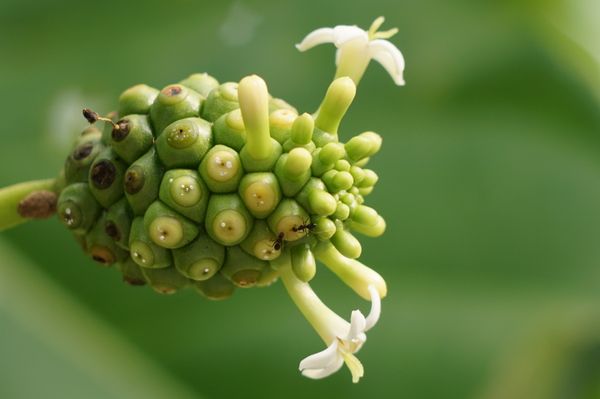
Noni (Indian Mulberry)
Morinda citrifolia
"আচ (Ach) / নোনি (Noni)"
Quick Facts
Noni (Indian Mulberry)
Morinda citrifolia
TreeBloom Months
About
Morinda citrifolia is a fruit-bearing tree in the coffee family, Rubiaceae. It is commonly known as noni or Indian mulberry, among many other names. Native to Southeast Asia and Australasia, the species was spread across the Pacific by Polynesian sailors. It is now cultivated throughout the tropics and is widely naturalised. The plant contains anthraquinones, which can be harmful to human health. Although the fresh fruit is edible, its pungent odour makes it worthwhile only as a famine food. It is also used in traditional medicine and processed into products such as juices.
Photo Gallery
Data Attribution & Acknowledgments
Text & Information
Photographs (6 images)
© Judgefloro, Dinesh Valke from Thane, India, Mrfly911, Samuel4103
Plantopedia aggregates openly licensed biodiversity data and imagery from the sources above. All content is sourced under Creative Commons or public domain licenses — see individual source links for full license terms and attribution requirements.
Help Improve This Record
Spotted something wrong or have a better photo? Let us know.
Community Observations
Sign in to share your observations about this species.
No observations yet. Be the first to contribute!